Seeing Texture: A Field Guide to Noticing and Photographing Everyday Surfaces
Problem
We pass through rooms, alleys, and garden paths without really seeing the surfaces that record time: a copper pan dulled by decades of use, the soft fuzz on a stem, a brick with a moss-green smear. Cameras and attention often hunt for obvious subjects—faces, flowers, or broad vistas—and miss the quieter evidence of living and use. The result is photos that are technically fine but flatter than the scene felt.
Principles
- Slow down and look small. Texture reveals itself when you commit to a closer look. Take a few extra seconds to move forward, crouch, or tilt your head.
- Use light direction deliberately. Side light (morning or late afternoon, or a lamp at an angle) sculpts surface detail. Overhead light tends to flatten texture.
- Choose an angle that emphasizes relief. Shooting at a low or oblique angle increases the sense of depth in scratches, grain, and ridges.
- Control depth of field with purpose. A moderate aperture (f/4–f/8 on most cameras) often keeps enough texture in focus while still offering separation. For macro details, stop down to increase sharpness across the surface.
- Include a hint of context or scale. A nail, a coin, or the edge of a table can anchor a close texture shot so it reads as an object rather than an abstract pattern.
- Mind color and tonal contrast. Texture benefits from contrast between highlights and shadows; muted colors can be powerful but watch for low contrast that obscures detail.
- Record what you noticed. Short notes—where you were, time of day, light direction—help train your eye and recreate setups later.
Examples
1. Kitchen Pan
Problem noticed: a copper pan with an uneven sheen and tiny scratches from years of stirring.
- Observation: warm side light from the window at 4 p.m. created soft ridges in the metal.
- How to photograph: place the pan near the window so light grazes the surface. Shoot at a low angle to exaggerate the scratches and use f/5.6 to keep the center sharp while letting the rim fall softly out of focus.
- Compositional note: include the wooden spoon’s handle as a scale reference and a warm color echo.
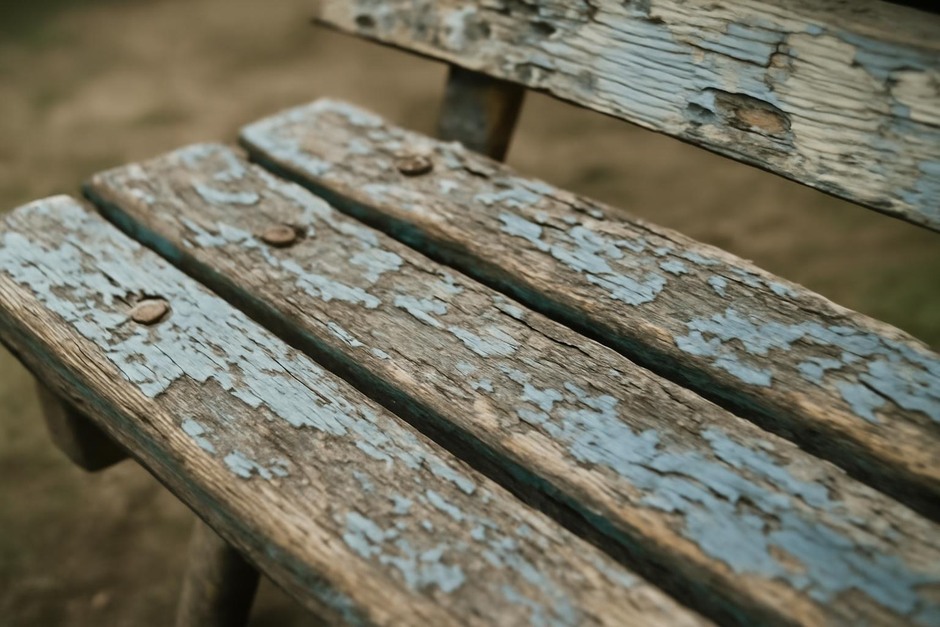
2. Garden Bench
Problem noticed: peeling paint exposing multiple layers and a fine build-up of pollen.
- Observation: morning side light picked out the raised edges of peeling paint.
- How to photograph: get close with a 50mm or 35mm lens, tilt slightly to show the layers. Use f/8 for a wider band of focus. Capture a little shadow in the grooves to enhance depth.
- Compositional note: show a sliver of the bench’s curve to suggest function and context.
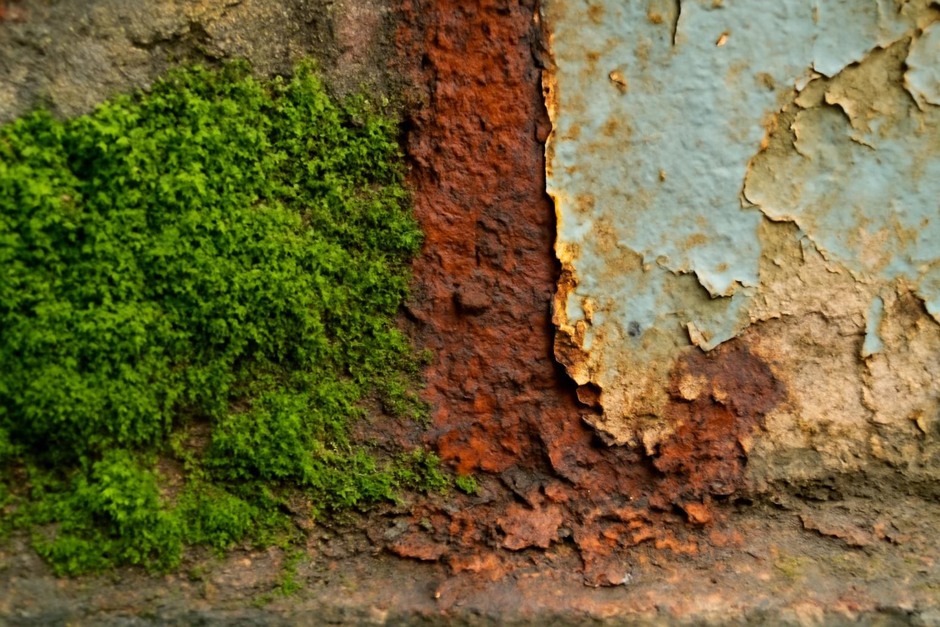
3. Rusted Sign
Problem noticed: enamel chipped to reveal orange rust, with a tiny insect track etched in dust.
- Observation: late-afternoon light was too harsh; switching to overcast softened reflections and revealed subtle color shifts.
- How to photograph: shoot perpendicular to the sign to emphasize color fields, then try a low angle to catch the edge where rust lifts. Use a polarizer if reflections obscure the surface.
- Compositional note: include a fraction of the mounting screw to give a sense of scale and narrative.
4. Brick Wall with Moss
Problem noticed: mortar lines worn unevenly, tiny plants finding purchase in cracks.
- Observation: diffuse morning light made moss appear richly textured without hard shadows.
- How to photograph: position the camera to run parallel to the mortar lines; use f/11 to keep several rows in focus, or isolate a single crack with a shallow depth of field if the pattern is busy.
- Compositional note: include a repeating element—three bricks, a corner—to turn texture into pattern.
Practice Checklist (20–30 minute exercise)
- Choose a small area (kitchen counter, a garden corner, or a street lamp post).
- Spend 3 minutes just looking: note light direction, colors, and two small details you hadn’t seen before.
- Find three angles: overhead, oblique/side, and low/edge. Make one shot at each angle.
- Take one wider shot that includes a scale element and two close-ups that emphasize texture.
- Adjust your aperture: one shot at a moderate aperture (f/4–f/8), one stopped down (f/11+), and one with shallow depth for detail isolation.
- Make a 10-word note about what made each shot interesting (light, color contrast, shape, wear).
- Review quickly and pick one image to revisit tomorrow at a different time of day.
Notice and photograph texture regularly and it becomes a filter through which ordinary places reveal stories. The surfaces you once ignored will start guiding where you point the camera.