A Simple Monthly Routine to Notice and Care for a Garden Bed
There’s a special kind of satisfaction that comes from paying steady attention to one small place across weeks and seasons. A single garden bed becomes a miniature map of weather, pollinators, soil life and human habits when you look for the right things. You don’t need fancy tools or a lot of time—just a habit that trains your eye and hands to notice what matters.
1. Read the bed’s shapes and patterns
Start with the obvious: how the bed looks. Shape, color blocks, and arrangement tell you what’s changing faster than any thermometer. Spend a few quiet minutes observing:
- Outline the major shapes: are leaves filling the space, are stems upright or floppy?
- Note color shifts: new green, pale older leaves, or sudden splashes of bloom.
- Track texture: soft foliage, glossy leaves, or rough seed heads.
Keep it simple—if a quick photo is easier than words, take one from the same angle each visit. Over time the sequence of images will reveal growth patterns and gaps you might otherwise miss.
2. Sense the soil and moisture
Soil is the hidden story of a bed. Your hands are the easiest instrument: roots, moisture, and crumb structure tell you how the garden is doing.
- Press a finger into the top inch of soil: crumbly, sticky, or dry?
- Smell briefly near the surface: a rich, earthy scent usually means active biology; a sour smell can indicate poor drainage.
- Look for surface signs: compacted tracks, exposed roots, or mulches that have shifted.
These sensory checks guide small, low-impact adjustments—adding a thin mulch patch, loosening the topsoil where it’s compacted, or simply delaying watering when the bed is already moist.
3. Notice movement and visitors
Life in a bed is often about motion: pollinators, beetles, wind-touched stems, or the way leaves quiver in sun and shade. Paying attention to movement deepens your understanding of the bed’s ecological role.
- Spend a minute watching: what visits the flowers, and when?
- Note common paths: are slugs taking the same route, or do insects prefer certain plants?
- Record unusual visitors or behaviors: fledgling activity, patch-feeding, or prolonged insect visits to a particular flower type.
These observations help you make choices about plant placement and companion planting if you decide to intervene. Even if you don’t change anything, you’ll gain pleasure from the bed’s micro-ecology.
4. Small tasks and a simple record
Observing invites tiny responses. The goal is to keep interventions modest and timed to the bed’s needs so you can learn what’s effective.
- Remove one spent flower head or a single brown leaf, rather than doing a full tidy every visit.
- Fix one small problem—push mulch back, stake a floppy stem, or clear debris from a drainage low spot.
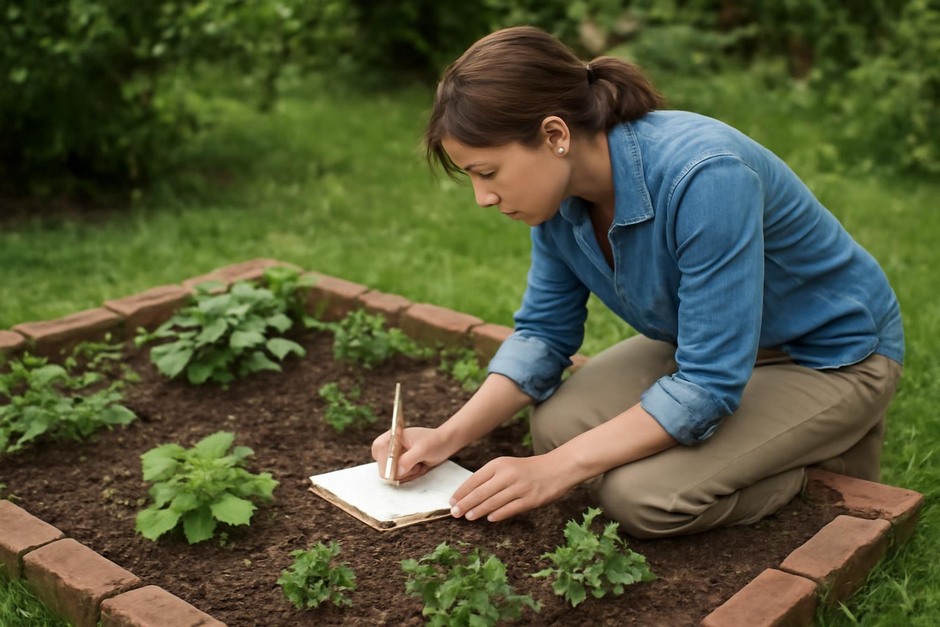
- Write one short line in a notebook or a note on your phone: what you saw and one change you made (or didn’t make).
Keeping records small—one line—makes the habit sustainable. Over months you’ll have a compact log that maps decisions against outcomes.
Measured conclusion and the 10-minute monthly ritual
Takeaway: deep attention doesn’t require drama. It asks for consistent, small acts of looking, sensing, and responding. Below is a short, repeatable routine you can use once a month. It takes about 10 minutes, requires only your senses and a pen or phone, and builds a long-term sense of place.
- Stand and scan (2 minutes) — Look at the bed from the same viewpoint you’ll repeat each month. Note two words that describe the overall mood (e.g., “compact” or “airy”).
- Touch the soil (1 minute) — Press the top inch with your finger and note moisture: dry, damp, or wet.
- Observe visitors (2 minutes) — Watch quietly; note the most common insect or bird and one movement pattern.
- Do one small task (3 minutes) — Remove one dead bloom, push back mulch, or stake a stem.
- Record one line (2 minutes) — Write the date, the two mood words, and one action you took (or chose not to).
Repeat this ritual monthly. Over a year you’ll collect a patient, useful archive of how that single bed responds to weather, care, and time. The habit trains your sensibility: you’ll begin to notice the small signals that matter and to find real pleasure in the slow work of attention.